
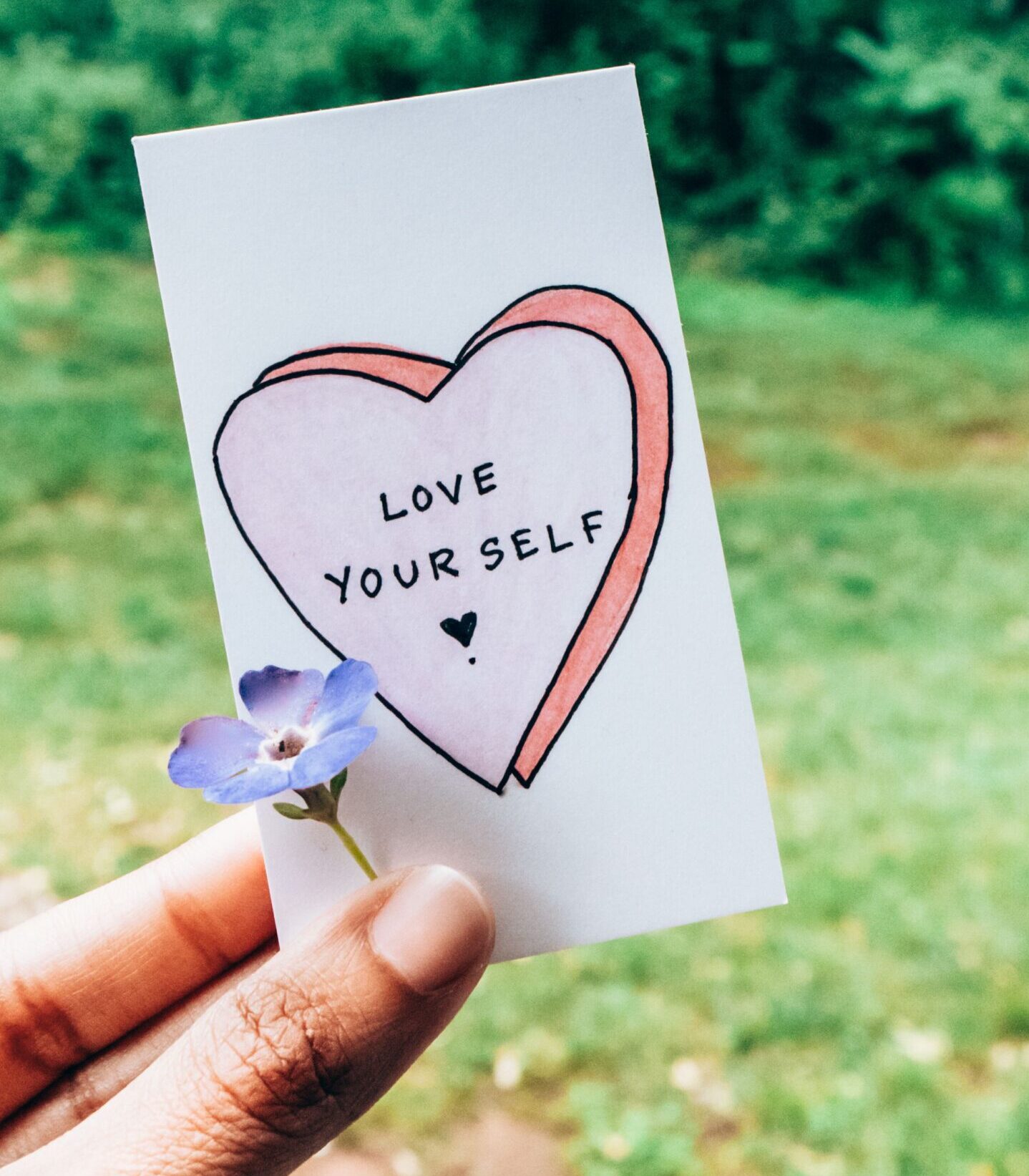
Self-compassion and drinking may not seem like natural companions, but learning to respond kindly to yourself can help.
“I screwed it up again!” “Why can’t I ever get it right?” “What’s wrong with me?”
How often have you spoken to yourself this way, especially about drinking? Would you speak this way to your best friend or to a young child? Probably not. Many of us are harsher with ourselves than we would be with someone we love. Self-compassion is the Golden Rule turned inward: treat yourself with the care and understanding you would offer someone else. Befriending yourself takes practice and patience, but it is possible to learn.
Cultivating Self-Compassion
Many of us know the inner critic: the voice that calls us a loser, says things are hopeless, or insists we’ll never change. It’s understandable that some people use alcohol to temporarily quiet that voice.
What if, instead of trying to silence the inner critic completely, you practiced building a kinder voice that could respond to it? Would you speak to yourself the way you do when you’re upset if you were speaking to the five-year-old version of you? Probably not. That younger self is still part of you.
Self-compassion can be difficult to learn. It may help to remember someone you treated you kindly—a grandparent, a teacher, a neighbor, or another caring person. If no one comes to mind, imagine a nurturing character from a book or movie, or recall a loving pet who showed you unconditional positive regard. You can borrow that being’s voice as you practice finding your own. You might also try speaking to your inner child. Imagine yourself at a younger age. A childhood photo can help you connect with that younger version of yourself. When you feel upset, try saying, “It makes sense you’re upset. I’m here with you;” “I won’t leave you;” or “I can see that you’re scared, lonely, or sad.”
Here is a guided meditation you can try to help you connect with your inner child: Guided meditation
Self-compassion grows with practice. The exercises below offer a few ways to begin.
3-Component Self-Compassion Practice
Shame can be a part of many people’s experience with alcohol—even when they are following a moderation plan. We may absorb all-or-nothing messages about substance use, such as all substance use is automatically abuse.
Sometimes, painful beliefs about ourselves—such as “I’m defective,” “I’m unlovable,” or “I’m a failure”—are shaped by messages we’ve heard from other people or the world around us. When one of these beliefs comes up try noticing it without judging yourself or forcing yourself to believe something different. Then bring in these 3 components of self-compassion:
Mindfulness—“It hurts to have this thought” or “It’s hard to feel like a failure”
Common humanity—“Other people probably feel this way, too. I’m not alone.” Kindness toward yourself—Imagine your best friend shared this belief about themself. What would you say? You might try: “I’m so sorry you’re feeling this way. I can see how painful it is. I don’t see you as a failure.”
This is another moment where it may help to picture your inner child. A photo can serve as a reminder of the person you’re learning to treat with compassion.
Here are some short guided self-compassion exercises by Kristen Neff: Self-compassion practices
Loving Kindness Meditation
Loving Kindness Meditation comes from Buddhist tradition and is used to cultivate goodwill towards others and yourself. You can use the following phrases below or choose your own.
First, bring to mind a person—or a pet or another being—you find easy to love. Close your eyes, if that feels comfortable, and picture them. Offer them these wishes:
May you be safe
May you be happy
May you be healthy
May you live with ease
Now picture that younger version of yourself and offer yourself these wishes: May I be safe
May I be happy
May I be healthy
May I live with ease
Finally picture yourself alongside the being you love and your wider community. Offer these wishes to all of you:
May we be safe
May we be happy
May we be healthy
May we live with ease
Sharon Salzberg offers loving kindness guided meditations on YouTube: Loving-kindness meditation
The RAIN Exercise—Recognize, Allow, Investigate, Nurture
RAIN is an exercise developed by Tara Brach for working with difficult emotions. You can also use it when you’re feeling the urge to drink, creating a pause to understand what might be going on and to make a more mindful choice. Patt Denning, one of the founders of Harm Reduction Therapy, has described that people use substances to reduce pain or increase pleasure. RAIN can help you get curious about what you’re seeking in a particular moment.
Recognize
Notice the thoughts, feelings, and behaviors present right now. For example: “I’m looking forward to my planned moderation day.”
“I want to forget about this awful conversation.” “I’m feeling really lonely.”
“I’m excited it’s Friday and I’d like to start drinking now before I meet up with my friends.”
Allow
Let those thoughts, feelings and behaviors be present without judging yourself for having them. “It’s ok that I feel eager right now.”
“It makes sense I don’t want to keep replaying that conversation.” “I can be lonely.”
“Of course I’m excited to celebrate with my friends.”
Investigate
With gentle curiosity, notice what’s happening in your body. You might ask: Where do I feel this? Are my muscles tense? Do I feel butterflies in my stomach, pressure in my head, a racing heart, or tiredness? For example:
“I have butterflies in my stomach and my heart is beating faster.”
“My thoughts are racing, there is pressure in my head and my neck is tight.” “I’m feeling tired and sluggish.”
Nurture
Offer yourself a gesture of kindness or reassurance. It may be helpful to picture your younger self:
“I care about you and I’m listening.”
“I see that you’re struggling and it makes sense.” “I’m here with you through these ups and downs.”
“I understand that you want to make these good feelings last.”
Or write yourself a thank-you note: take a moment to thank yourself for the effort you’re making—whether that means noticing a pattern, trying something different, or beginning again.
Explore more resources on RAIN from Tara Brach: RAIN and self-compassion
Melissa Eaton has been providing harm reduction therapy to individuals and groups since 2014. She is passionate about working with people dealing with trauma symptoms, depression, anxiety, grief and especially those who use any substances. She believes that everyone has the inner strength and resilience to overcome obstacles and create positive change in their lives. She is also trained in EMDR and Ketamine Assisted Psychotherapy.
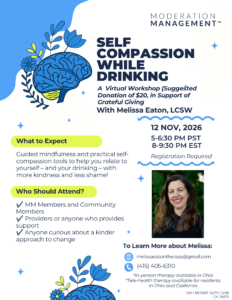
Practice self-compassion with us
Join Melissa Eaton for MM’s free virtual workshop “Self-Compassion While Drinking” on Wednesday, November 12 | 5–6:30 PM PST / 8–9:30 PM EST. View the event details and register.
Grateful Giving
This November, MM’s Grateful Giving campaign invites you to thank the people who made MM possible for you, too. Perhaps it was a facilitator, a friend, or someone whose words stayed with you. Write them a note, and, if you’re able, pay that gratitude forward with a gift to MM so its meetings, resources, and community remain available for the next person.
Pay it forward through Grateful Giving.

Whether or not you give, you belong here.



Such a lovely read. I often struggle with that harsh inner critic, so I found the focus on self-compassion really comforting. Thank you so much.